


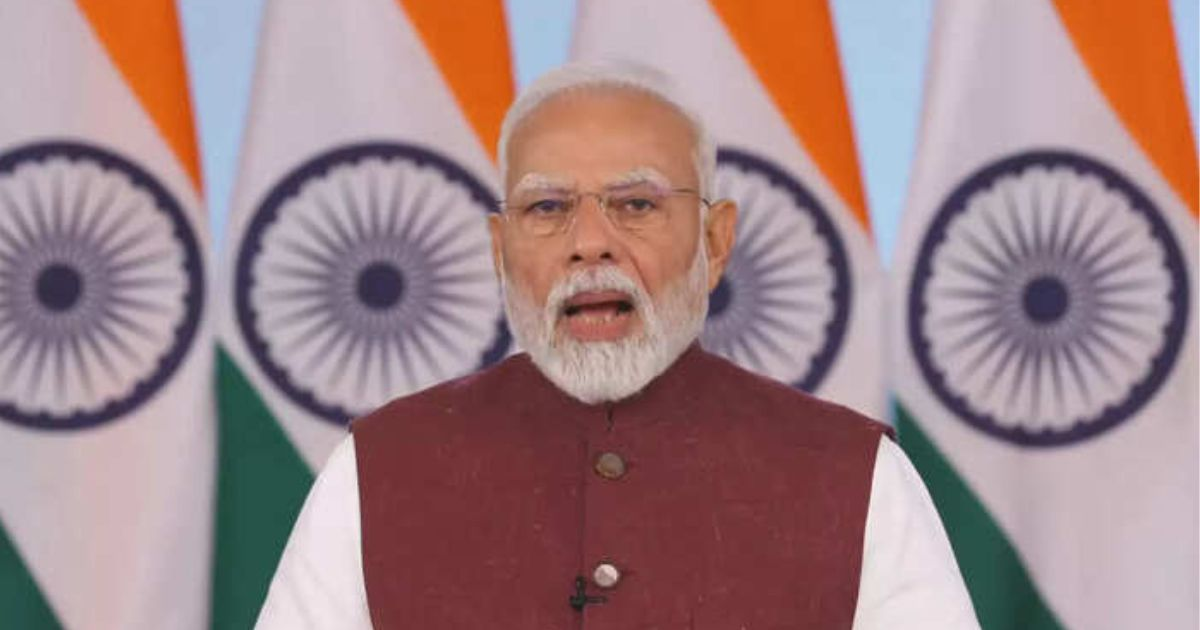
On May 11, 2026, Prime Minister Narendra Modi stood before a packed gathering at Secunderabad Parade Grounds in Hyderabad and made an unusual request. He didn’t announce a new scheme or a tax cut. Instead, he asked ordinary Indians to change their daily habits — to protect the country’s economy from a storm brewing far away.
That storm? The West Asia crisis. Tensions in the region have pushed crude oil above $100 per barrel, briefly touching a 52-week high of $126. Supply chains passing through the Strait of Hormuz — a critical oil shipping route — are under stress. India, which imports over 85% of its crude oil, is feeling the heat.
$12652-week high crude oil price (per barrel)
85%+Of India’s crude oil is imported
7Appeals made to citizens for self-reliance
Modi framed this as a call for “economic self-defence,” urging every Indian to become an economic warrior. Whether you agree with the politics or not, these seven appeals have real implications for your wallet — and for where smart money should flow.

The 7 appeals, explained simply
1. Work from home where possible
Revive the WFH culture seen during COVID-19. Every commute saved is fuel saved — and foreign exchange conserved.
2. Hold off on gold purchases
2. India is the world’s second-largest gold importer. Modi asked families to pause non-essential gold buying — especially for weddings — to ease pressure on the rupee.
3 .Use public transport & carpool
Cut petrol and diesel use by taking the metro, bus, or sharing rides. Modi also encouraged shifting cargo from roads to railways and adopting electric vehicles wherever possible.
6. Choose Indian-made products (Swadeshi)
Use fewer foreign-branded goods and go Vocal for Local. This keeps money circulating within the Indian economy and reduces the trade deficit.
5. Reduce edible oil consumption
India imports large quantities of palm oil and sunflower oil. Cutting back reduces import dependence and helps keep the current account deficit in check.
6. Reduce dependence on chemical fertilizers and support natural farming
Farmers are urged to reduce dependence on imported chemical fertilisers and move toward organic, sustainable alternatives — supporting both the environment and India’s import bill.
7. Avoid foreign travel for one year
Unless absolutely necessary, skip that international vacation or destination wedding abroad. Every dollar spent overseas puts pressure on India’s foreign exchange reserves.
“Patriotism is not only about the willingness to sacrifice one’s life on the border. In these times, it is about living responsibly and fulfilling our duties to the nation in our daily lives.” — PM Modi
Why does this matter to your money?
At first glance, this looks like a government asking citizens to tighten their belts. But from an investor’s lens, these seven appeals are actually signals about where the economy is headed — and where opportunities may be hiding.
When a government publicly calls for reduced import spending and domestic self-reliance, it usually follows up with policy support — subsidies, tax breaks, and incentives for the sectors it promotes. That’s where the smart money goes.
Investor playbook: Sectors to watch
Electric Vehicles (EV) & EV infrastructure — With Modi urging EV adoption, companies making EVs, batteries, and charging stations are in policy tailwind territory. Watch Tata Motors, Ola Electric, and EV ancillary suppliers.
Public transport & Metro stocks — Push for public transport use benefits rail and metro operators. Infrastructure plays like IRFC, RVNL, and metro construction firms could see renewed interest.
Domestic FMCG & Make-in-India brands — A Swadeshi push rewards homegrown consumer brands over foreign MNCs. Indian-owned FMCG companies may see a demand tailwind.
Organic farming & Agri-input companies — Natural farming means demand for bio-fertilisers, organic inputs, and agri-tech. This is a slow burn, but early movers in the agri-input space stand to benefit.
IT & remote-work enablement — A WFH revival keeps cloud, SaaS, and collaboration tools in demand. Indian IT majors and productivity software companies benefit indirectly.
Domestic tourism — If Indians skip foreign holidays, they spend at home. Domestic hotel chains, hill-station resorts, and Indian travel platforms could see a boost.
What should everyday savers do?
If you’re not an active investor, here’s the simple version: the government is signalling that imported goods — fuel, gold, foreign products — may get more expensive, or face policy headwinds. That means:
On gold: This is not the time to panic-sell your existing gold. Modi’s appeal is about new purchases, not existing holdings. If you hold gold as 10–15% of your portfolio for safety, that’s still sound strategy. Just don’t over-buy now.
On fuel costs: Rising crude prices often feed into inflation — your groceries, transport, and utilities get costlier. Building a small emergency fund of 3–6 months of expenses is a wise move in uncertain times like these.
On the rupee: Global pressure on forex reserves can weaken the rupee. If you have international financial commitments or are planning foreign education, it may be worth planning currency exposure carefully.
A word of balance
The opposition has called these appeals “economic failure repackaged as moral advice,” pointing to inflation and weak job creation. The government, in turn, says fuel stocks are stable and this is about “efficient utilisation” — not shortage management.
The truth, as always, sits somewhere in the middle. These are voluntary appeals, not laws. But the underlying economic pressure — high oil prices, forex stress, global supply disruption — is very real, regardless of political interpretation.
For the MoneyHulk reader, the question isn’t who’s right. It’s: how do I position my money wisely given what’s happening?
The MoneyHulk bottom line
Modi’s seven appeals reflect real global economic pressure on India. For savers: build your emergency fund, ease off gold buying for now, and track domestic inflation. For investors: the sectors the government is nudging — EVs, domestic brands, agri-tech, public transport — are worth putting on your watchlist. Policy tailwinds are one of the most reliable signals in long-term investing.

Sethuram Kishore is the founder of MoneyHulk and Worthview, with over 18 years of experience in SEO, digital marketing, and online publishing. Since launching Worthview in 2008, he has published hundreds of articles across finance, business, technology, and consumer topics. Through MoneyHulk, he shares practical, research-backed guides on personal finance, investing, banking, entrepreneurship, and wealth building.


